
Tupp — 2026
Focus, routine and time tracking in one place
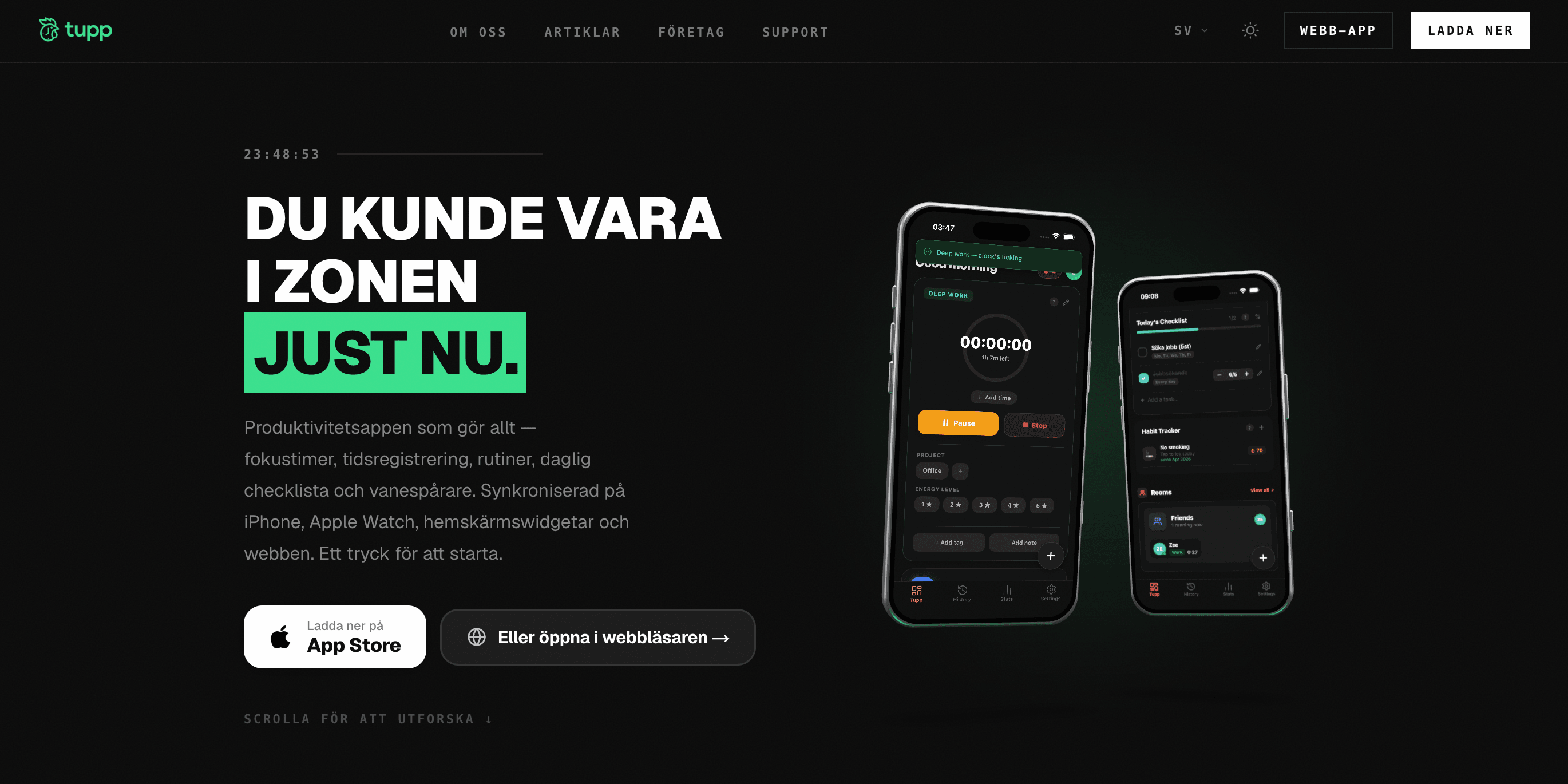
Our own product: a focus, routine and time-tracking application for web and mobile, built for people whose day is a mix of deep work, recurring habits and billable hours that all need to live in the same place.
The situation
Focus timers, habit trackers and time-tracking tools are three separate categories of app, and most people who need one need all three. The result is a routine app that does not know you were in a focus session, and a timesheet that has to be reconstructed at the end of the week from memory.
We wanted the three to be the same data. A focus session is time worked. A routine is a commitment that either happened or did not. A timesheet should be a consequence of the day rather than a second job at the end of it.
What we did
Tupp is one product across web and mobile, sharing a model where sessions, routines and tracked time are views onto the same underlying record rather than three databases pretending to cooperate.
The web application is where planning and review happen; the mobile app is where the day actually gets logged, which means it has to work in a second, one-handed, without thinking about it.
Why we build our own
Running our own product keeps us honest about the things consultancy work can hide: retention, store review, support load, and the cost of a schema decision you have to migrate on devices you do not control.
It is also the fastest way to keep our own tooling current. Everything we learn shipping Tupp goes into client work.
Let’s build something that lasts.
Tell us about the project. If we’re not the right studio for it, we’ll say so — and usually point you at someone who is.